
Opens in a new tab

Buy an Uptown Cheapskate Franchise

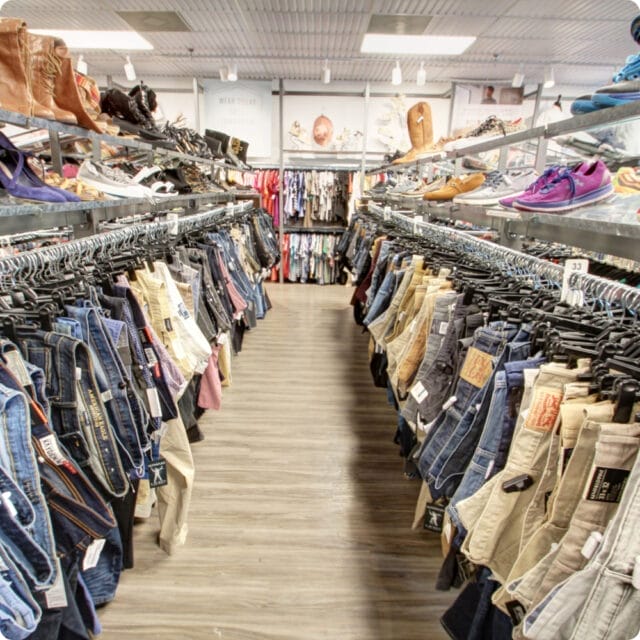
Uptown Cheapskate is a resale fashion franchise that buys gently used, on-trend clothing and accessories directly from local sellers and resells them in a clean, boutique-style setting at well below original retail. Founded in 2008 in Salt Lake City, it was created by the next generation of the family behind Kid to Kid, the children’s resale concept launched in 1992.

Both brands now sit under BaseCamp Franchising, which operates more than 270 stores across the two concepts. Uptown Cheapskate runs a brick-and-mortar, territory-based model built around a proprietary software suite that handles pricing, point-of-sale and inventory, with real-time data guiding what each store buys and merchandises.

The customer base works two ways: local sellers supply inventory for cash or store credit, while value-minded shoppers, many of them younger and sustainability-driven, buy it. Stores operate across 27 states. What sets the brand apart is its upscale, curated presentation, which distances it from cluttered traditional thrift while keeping the treasure-hunt appeal.

Latest Resales

  • There are currently no Uptown Cheapskate resales available

Why buy an Uptown Cheapskate Franchise?

The case for Uptown Cheapskate rests on a recession-resistant category and a model that earns margin on both sides of the counter: stores acquire inventory locally at low cost and resell it at accessible prices, rather than carrying the wholesale burden of conventional apparel retail. In a resale market that has proved resilient across economic cycles, that buy-local, sell-stylish structure is a real differentiator.

Buyers also gain BaseCamp Franchising’s infrastructure, refined over three decades across Uptown Cheapskate and sister brand Kid to Kid: proprietary buying and inventory technology, real-time analytics, and dedicated operations, marketing, technology and finance teams. Protected territories and an active multi-unit owner community add room to scale. To buy an Uptown Cheapskate franchise as a resale is to step into an established store with existing local seller relationships and a known customer base already in place.

Uptown Cheapskate Franchise Costs & Information

Based on 2025 data reported in the 2026 FDD

  • Brand Profile

    • Year Founded

      2008

    • Franchising Since

      2008

    • New Startup Cost

      $364,015 – $682,215

    • Avg. Resale Price

      Contact us for details
  • Franchise Fees

    • Initial franchise Fee

      $50,000

      for new territories

    • Transfer Fee

      $35,000

    • Royalty Fee

      5%

      of Gross Revenue

    • Marketing Fee

      0.5%

      of Gross Revenue

  • Unit Performance

    • Total Units *

      162

    • New Units Opened *

      20

    • Units Transferred *

      4

    • Avg. Unit revenue *

      Not Disclosed

    * Based on 2025 data reported in the 2026 FDD

Uptown Cheapskate – Additional  Information

  1. Training & Support

    Incoming owners receive structured onboarding: 30 hours of online, classroom and in-store training plus a five-day internship at a top-performing store, an extensive video library, and in-person sessions at corporate headquarters. The core operating tool is BaseCamp's proprietary software suite for pricing, point-of-sale and inventory, backed by real-time buying and merchandising analytics. On an ongoing basis, dedicated operations, marketing, technology and finance teams support running stores. Resale buyers should confirm what transfer training and proprietary-software access carry over to incoming ownership and staff.

  2. Ideal Owner

    The model suits hands-on local operators who want to run the floor rather than own passively. Strong retail and people-management instincts matter, as owners hire and lead store teams, manage daily operations and shape the in-store experience. A merchandiser's eye helps, since buying well from local sellers drives margin, though the proprietary software guides pricing. No prior retail experience is required, but candidates should be customer-focused, community-minded and comfortable building a business around sustainability and value. Many owners go on to run multiple stores, so appetite for growth is a plus.

  3. Recognition & Awards

    Uptown Cheapskate has appeared on Entrepreneur's Franchise 500 for several years, most recently ranking #300 in 2026 (#249 in 2025), and was named to Franchise Business Review's Top 200 Franchises in 2026, a list driven by franchisee satisfaction surveys. Its parent, BaseCamp Franchising, adds credibility through more than 270 stores across Uptown Cheapskate and Kid to Kid and a track record in upscale resale dating to 1992. For resale buyers, brand-level recognition should be weighed alongside the specific territory's local reviews, referral strength and community visibility.

  4. Industry / Market

    Uptown Cheapskate operates in the US secondhand apparel market, which research firm ThredUp projects will reach roughly $79 billion by 2030, growing about 7% a year and outpacing traditional retail. Demand is led by younger shoppers who prioritise affordability, sustainability and individual style, and the category has historically held up well in downturns as buyers trade down without giving up fashion. For resale buyers, that resilience matters, but local performance still hinges on a steady supply of quality used inventory from the surrounding community and the store's standing among nearby shoppers.

Learn more about
how to own a Uptown Cheapskate franchise resale

Please fill out the form below and a Franchise Flippers expert will be in touch with you shortly.

The Franchise Brand Index

This page is part of Franchise Flippers’ independent franchise Index, designed as an educational resource to help potential buyers explore the franchise resale market and compare brands.

Trademark & Affiliation Disclaimer

This website is an independent, informational resource. All trademarks, logos, and brand names displayed are the property of their respective owners and are used solely for identification and educational purposes. Their use does not imply any affiliation with, endorsement by, or sponsorship from the respective trademark holders.